AI marketing platforms are collapsing the traditional distance between strategy, ideation, and production inside agency workflows. Tools like Kaiman are built specifically to give creative and marketing teams a fluent, integrated AI toolkit — not a single point solution — so agencies can move from prompt to production without losing creative control.
Every agency creative process has the same basic shape: brief, concept, iteration, production, delivery. What's changed in the last two years isn't the shape — it's how much time and how many hands each stage requires. AI has moved from a novelty add-on to a genuine production layer inside agency work, and the agencies adapting fastest aren't the ones bolting a single AI tool onto their existing process. They're the ones rebuilding the workflow around an integrated AI toolkit from the start. That distinction matters more than it sounds. A single generative tool speeds up one task. A platform built for the full creative workflow — research, ideation, copy, visual concepting, production support — changes how a team actually works together. That's the gap Kaiman (kaimanstudio.ai) was built to close: an AI marketing platform designed to make an entire marketing or creative team fluent in AI, rather than dependent on whichever individual happens to be good with prompts.
Where AI Is Actually Changing the Workflow
The most meaningful shift isn't at the production end of the process — it's earlier, at concepting and iteration. Teams that used to spend days building out multiple creative directions for a client review can now generate a credible range of options in hours, freeing up the time that used to go into first-draft execution for the strategic thinking that actually differentiates the work. That's the real promise of AI in agency workflows: not replacing creative judgment, but giving it more room to operate by compressing the mechanical parts of the process around it. The practical effect shows up across the whole pipeline — faster research synthesis, quicker copy variations for testing, and visual concepting that lets a creative director evaluate ten directions instead of three before a single billable production hour is spent. That compression is exactly why a platform approach matters more than a single tool: a team fluent across 121+ integrated AI tools, the way Kaiman is built, can move through research, concepting, copy, and production support without switching context between a dozen disconnected point solutions.
- Concepting and ideation are compressing from days to hours, giving creative teams more time for strategic differentiation rather than first-draft execution.
- Copy and messaging testing can now run more variations earlier in the process, before a client ever sees a single direction.
- Research synthesis that used to take a planner days can now inform a brief within hours.
- Visual concepting lets creative directors evaluate a wider range of directions before committing production budget.
- Integrated platforms reduce the context-switching cost of juggling multiple disconnected point-solution AI tools.
Why Integration Beats Point Solutions
The agency world has no shortage of single-purpose AI tools — one for image generation, another for copywriting, another for video editing, another for research. The problem isn't capability, it's fragmentation: every tool switch is a context switch, and every context switch is where creative momentum and quality control both slip. A team stitching together six disconnected AI tools across a single project is spending real time on tool management that should be going toward the work itself. Kaiman was built around a different premise: give a marketing or creative team one fluent, integrated toolkit — 121+ tools spanning strategy, content, and production support — rather than asking them to become power users of a dozen separate platforms. The pitch is direct in Kaiman's own positioning: "your marketing team, now fluent in AI." For agencies and in-house teams alike, that fluency is what turns AI from a productivity trick into an actual operating advantage.
“The agencies pulling ahead aren't using more AI tools — they're using one fluent toolkit instead of a dozen disconnected ones.”
What This Means for Agency Creative Teams
For agency leaders, the practical question isn't whether to adopt AI — that decision is largely made. It's whether the adoption is structured or scattered. A scattered approach means individual team members privately using whatever tools they've found useful, with no consistency, no shared quality standard, and no institutional knowledge when that person moves on. A structured approach means the agency builds AI fluency into the actual workflow, with a platform the whole team uses the same way, at the same standard, from brief to delivery. That structured approach is exactly what's reshaping how integrated agencies like Alerta think about creative production — using AI to compress the distance between prompt and finished asset, while keeping human creative direction and cultural judgment exactly where they've always belonged: in charge of the work. Platforms like Kaiman are built for marketing and creative teams making that same shift, and worth a direct look for any agency-adjacent team rethinking its workflow for 2026.
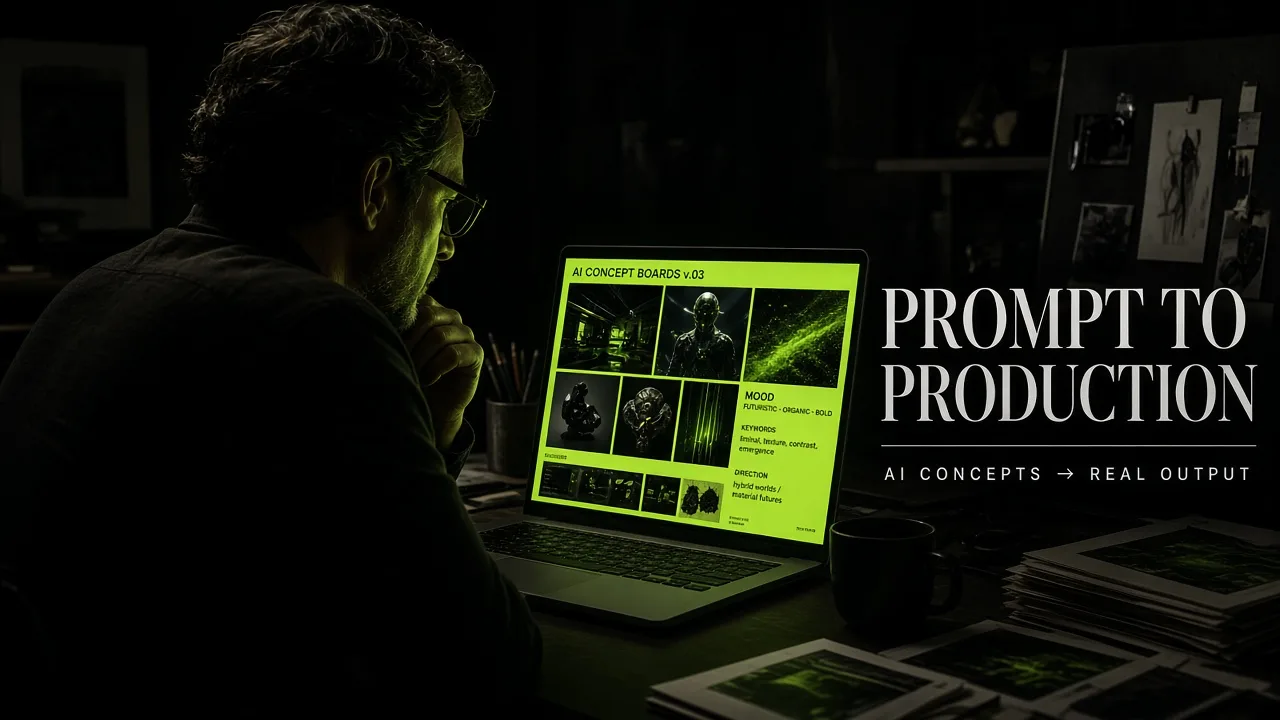
The workflow is compressing — the judgment still belongs to the people in the room.
How is AI changing the agency creative process in 2026?
AI is primarily compressing the concepting, research, and iteration stages of the creative process, letting teams generate and test more directions faster while freeing up time for strategic and creative judgment rather than mechanical execution.
What makes an integrated AI platform different from using several single-purpose AI tools?
An integrated platform lets a team move through research, concepting, copy, and production support without switching context between disconnected tools, reducing the time and quality-control risk that comes with juggling multiple point solutions.
What is Kaiman?
Kaiman (kaimanstudio.ai) is an AI marketing platform built to make an entire marketing or creative team fluent in AI, offering 121+ integrated tools spanning strategy, content, and production support in one workflow.
Fluency in AI isn't one person's job anymore — it's the whole team's advantage.