Brands are moving budget away from bloated holding-company hierarchies and billable-hour retainers toward lean, senior-led, outcome-based agency partnerships — a structural shift that favors independent multicultural shops built on direct senior access rather than account-management layers.
For two decades, the holding-company model sold brands on scale: global reach, integrated media buying, a roster of specialized sister agencies under one roof. In 2026, that promise is being tested by the one thing it was never built for — speed. In a roundup of predictions from 100 advertising leaders published by Triton Digital, the throughline was consistent: compensation is moving from the billable hour toward outcomes, and bloated creative departments and account-management hierarchies are becoming a liability rather than a strength.
None of this means big budgets are disappearing. It means the agencies capturing them look different — smaller, senior-led, and structured so the person who pitched the strategy is still the person running it six months later. That is precisely the model independent, multicultural shops have operated on by necessity for years, and it is now becoming the model enterprise clients are actively seeking out.
What's Actually Changing in How Agencies Get Paid and Structured
The shift isn't cosmetic. Marketers who once accepted layered account teams and long retainers as the cost of scale are now asking a harder question: does this structure actually make the work better, or just make the invoice bigger? As AI absorbs a growing share of production and media-buying tasks that used to justify large account teams, the case for headcount-as-value is weakening fast.
What's replacing it is a leaner model built around senior talent, project-based scopes, and compensation tied to what the campaign actually delivers. That model rewards agencies that were never large enough to hide behind process in the first place — and it specifically rewards agencies fluent in more than one language and culture, since that fluency can't be outsourced to a template.
- Compensation shifts from billable hours to outcome-based fees tied to real campaign performance.
- Independent, senior-led shops gain ground over multi-agency holding-company networks.
- Long retainers give way to project-based engagements scoped to a specific brand need.
- AI moves from a visible add-on tool to an invisible engine running inside everyday agency workflows.
- Human-made, culturally specific creative work becomes a premium differentiator as generic AI content floods every channel.
Why Multicultural, Senior-Led Shops Are Positioned to Win This Shift
Alerta! has run senior-led, multicultural accounts since day one — not as a trend response, but because that is what serving a bilingual, multicultural client base has always required. Danilo Alvarez and the creative team sit on strategy and production simultaneously; there is no separate junior tier translating a senior vision into a lesser version of itself for the client to approve.
That structure matters more as the market it's built for keeps growing. U.S. Hispanic consumers now represent a disproportionate share of category dollar growth relative to their share of spend — a gap explored in depth on Alerta's sister site, ushispanicmarketingdata.org — and brands chasing that growth need creative partners who can execute in both languages natively, not through a translation layer bolted onto an English-first campaign.
“The agencies winning in 2026 aren't the biggest. They're the ones where the client can still reach the person who had the idea.”
What to Look for When Evaluating an Agency Partner in 2026
Ask who is actually on the account day to day, not just in the pitch deck. Ask how compensation is structured — hours billed, or outcomes tracked. Ask whether multicultural and Spanish-language work is a core discipline at the agency or a add-on service routed through a subcontractor, because that distinction shows up in the work every time.
Alerta! works this way with clients including Walt Disney, Molson Coors, AARP, and Universal Orlando — enterprise accounts run by a senior, multicultural team without a holding-company org chart between the brief and the work. That's not a smaller version of a big agency. It's a different model, built for how brands actually need to move now.
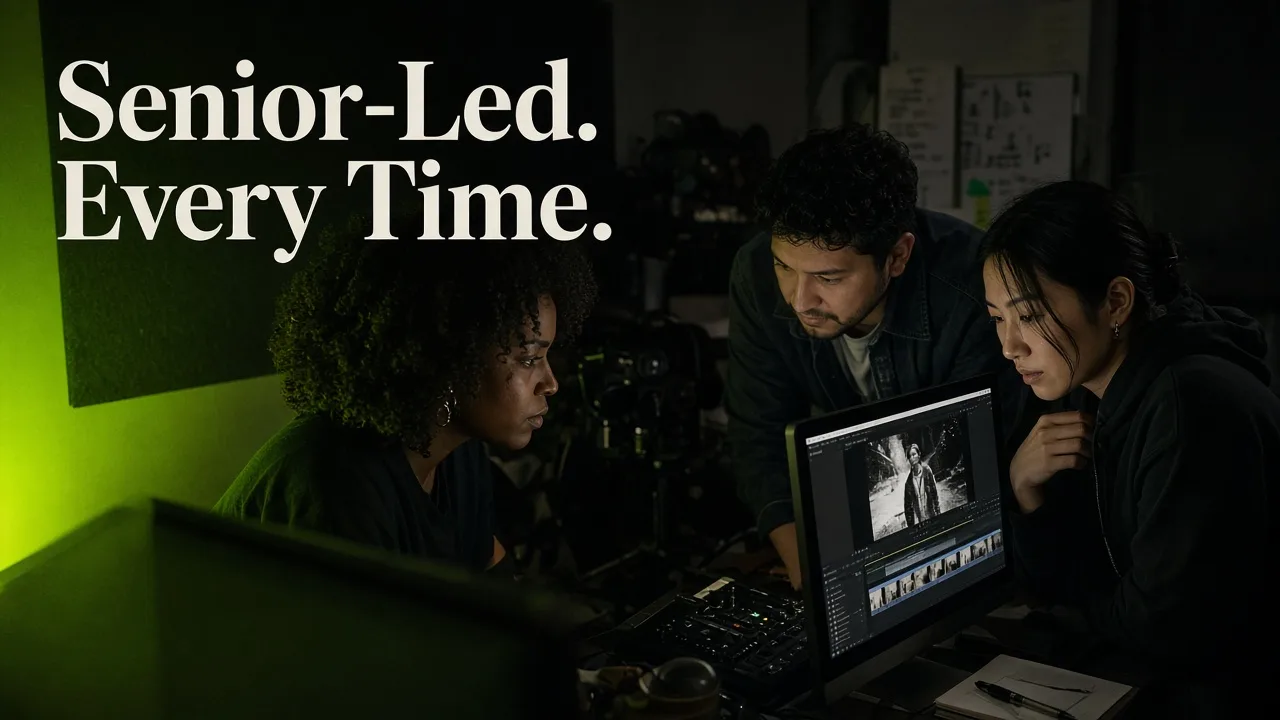
No account layers. The senior team that pitched the work is the team that makes it.
What does "senior-led" mean in an agency context?
A senior-led agency puts the strategists, creatives, and producers who pitched the work directly on the account — not a junior team executing a senior plan secondhand. Clients get direct access to the people making decisions, which shortens revision cycles and keeps creative judgment consistent from strategy through final delivery.
Why are holding companies losing ground to independent agencies in 2026?
Holding companies built their value proposition on integrated scale and negotiated media discounts. As AI absorbs much of the production and media-buying workload that once justified large account teams, brands are prioritizing speed and cultural fluency over sheer size — strengths that lean, senior-led shops are structurally built to deliver.
Is a smaller agency riskier for a national or enterprise brand?
Not when the senior team has already run enterprise accounts. The relevant question isn't headcount — it's whether the agency has delivered at scale before. For multicultural and multinational brands specifically, an agency's linguistic and cultural fluency often affects campaign performance more than its size does.
Your next campaign doesn't need more account layers. It needs the senior team that built the pitch, actually building the work.