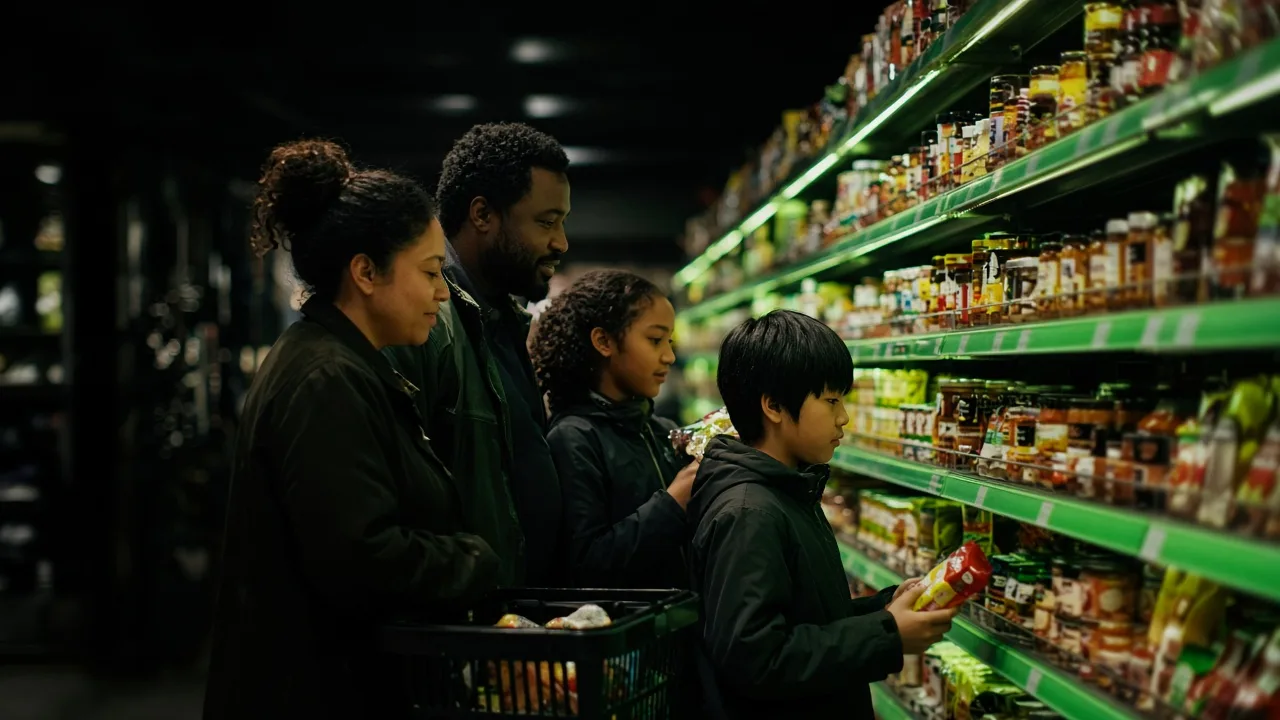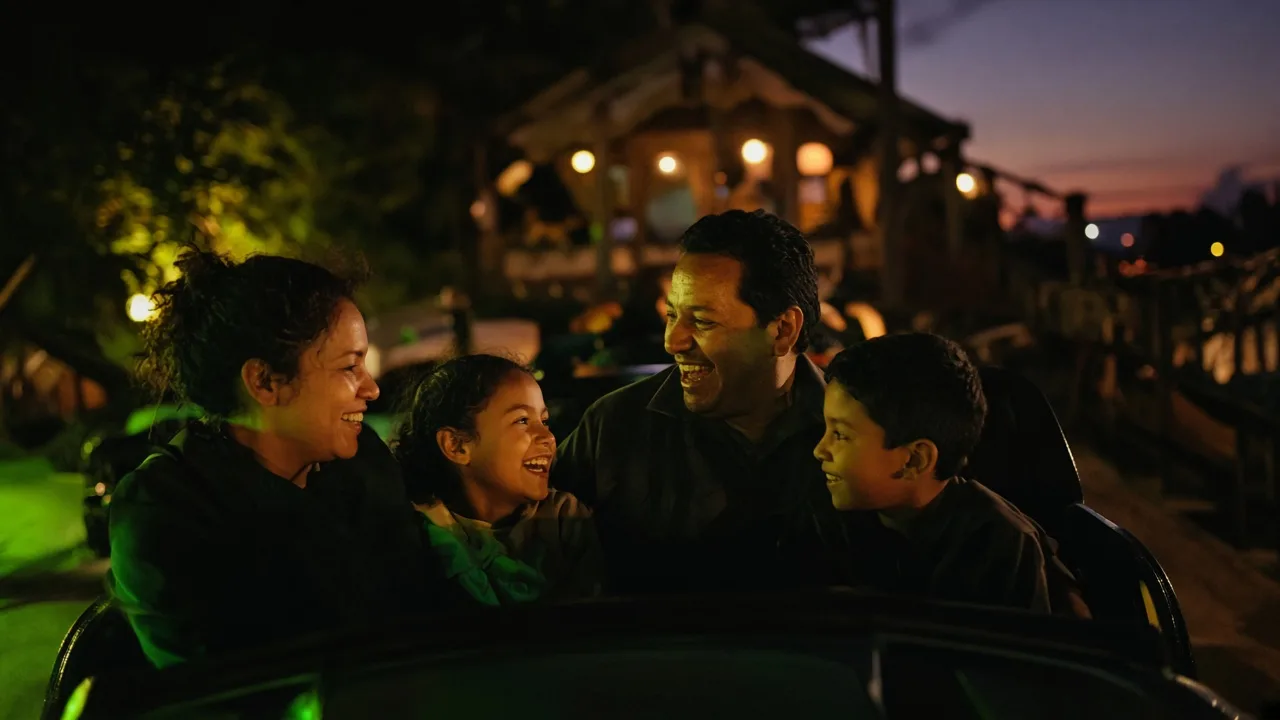
Entertainment and theme park brands routinely under-perform with multicultural audiences not because the media spend is wrong, but because the creative is: a translated version of an English-first campaign reads as an afterthought to families who can tell the difference immediately, and that gap shows up directly in attendance and loyalty.
Theme parks and entertainment brands compete for a finite number of family vacation days and discretionary dollars, and multicultural households — particularly Hispanic families — represent an outsized share of that spend relative to population share. Yet most entertainment marketing built for this audience still starts as an English-language campaign and gets translated afterward, rather than conceived natively for the audience from the first creative brief. That distinction matters more than most media plans account for. A family that has been marketed to as an afterthought for years recognizes a translated campaign instantly — the humor doesn't land the same way, the family dynamics on screen don't reflect how the audience actually makes vacation decisions, and the call to action feels generic rather than personal. None of that is a subtitling problem. It's a creative-strategy problem.
Where Entertainment Marketing Usually Breaks Down for Multicultural Audiences
The theme park and entertainment industry is investing heavily in growth for 2026 and beyond, with demand climbing across both domestic and international visitor segments. But growth in the addressable market doesn't automatically translate into growth with multicultural households unless the creative strategy treats them as the primary audience for at least some of the campaign, not a secondary translation of the primary one. Family decision-making is the clearest example. In many multicultural households, and Hispanic households specifically, vacation decisions are made collectively across generations, with different family members influencing different parts of the decision — budget, dates, destination, activities. A campaign built around a single nuclear-family decision-maker archetype misses that dynamic entirely, no matter what language it's delivered in.
- Creative built natively for the audience outperforms creative translated after the fact, every time.
- Multigenerational decision-making in vacation planning needs to be reflected in the creative, not just the media targeting.
- Cultural specificity in humor, tone, and family dynamics can't be retrofitted onto an English-first script.
- Attendance and loyalty follow relevance — audiences notice when a brand built the campaign for them versus around them.
- Bilingual creative development from the first brief avoids the credibility gap a late-stage translation always carries.
What Native, Bilingual Creative Actually Looks Like for This Category
It starts with the brief, not the translation pass. A campaign built for multicultural entertainment audiences needs its own creative strategy from day one — its own casting, its own family dynamics, its own humor and pacing — developed alongside the English-language version rather than derived from it after the fact. That's the model Alerta! runs for entertainment and theme park clients: senior creative and strategy talent developing bilingual campaigns in parallel, not sequentially, so neither version reads as the secondary one. It's the same discipline covered in more depth in Alerta's piece on why bilingual campaigns fail when they're translated instead of created — the two ideas are directly connected.
“A translated campaign asks a multicultural family to meet the brand halfway. A native one doesn't have to.”
Why This Matters More Every Year, Not Less
The audience this affects isn't a niche segment — it's a growing, high-spending share of the entertainment and theme park category, and the gap between brands that get multicultural creative right and brands that don't is widening as competition for the same family vacation dollars intensifies. Entertainment brands that treat multicultural creative as core strategy rather than a media add-on are the ones building lasting attendance and loyalty with this audience — not just reach.
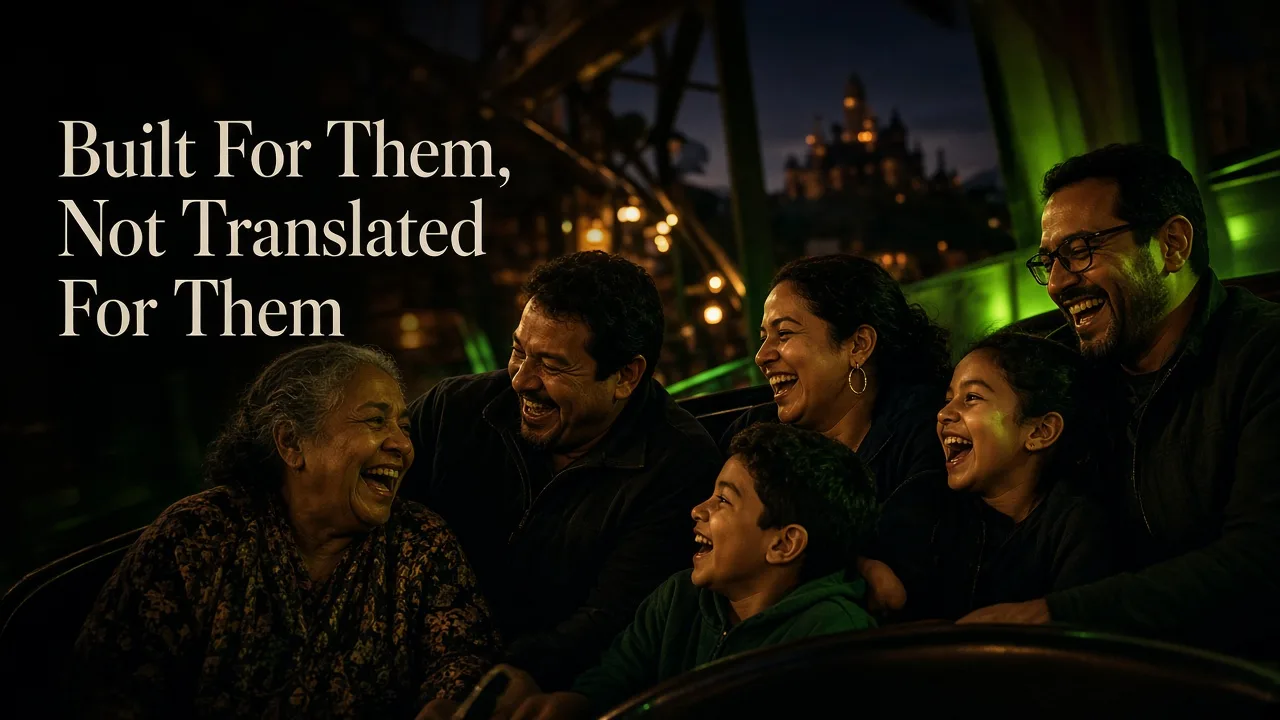
The families who notice a translated campaign are the same families who reward a native one.
Why does multicultural marketing matter so much for theme parks and entertainment brands?
Multicultural households, and Hispanic families in particular, represent a disproportionately high share of entertainment and vacation spending relative to population share, and family vacation decisions in these households are often made collectively across generations — a dynamic that a translated, single-decision-maker campaign typically misses.
What's the difference between a translated campaign and a native bilingual campaign?
A translated campaign starts as an English-first creative brief and gets converted afterward. A native bilingual campaign develops the Spanish- and English-language versions in parallel from the same original brief, with casting, humor, and family dynamics built specifically for each audience rather than carried over from one to the other.
How can an entertainment brand tell if its multicultural marketing is falling short?
The clearest signal is attendance and loyalty gaps relative to media spend directed at multicultural audiences — if reach is strong but conversion and repeat visitation lag, the creative is usually the cause, not the targeting.
Multicultural families can tell within seconds whether a campaign was built for them or translated for them.