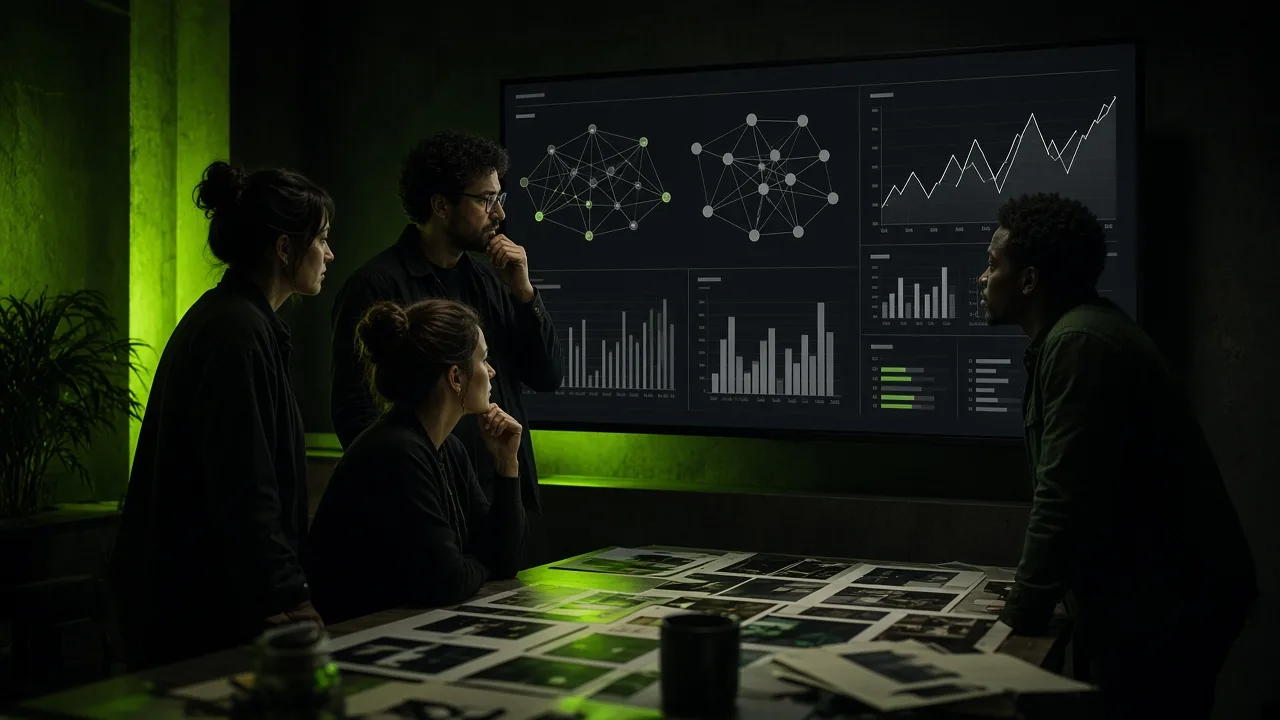
Through most of the AI adoption wave, agencies used generative tools as a faster way to do individual tasks: draft copy, generate an image, summarize research. In 2026, the more consequential shift is agentic, AI systems that run entire multi-step workflows autonomously, with a person reviewing outcomes rather than performing every step, and it's changing how agency teams are structured.
The first wave of agency AI adoption was tool-based: a copywriter used a generative model to draft faster, a designer used one to generate concept variations, a strategist used one to summarize research. Useful, but each tool still required a person driving it step by step. The current wave is different in kind, not just degree. Agentic AI systems can now execute a multi-step workflow, research an audience, draft creative variations, test messaging, compile a report, largely on their own, with a human reviewing the output at defined checkpoints instead of performing each task manually.
WHAT CHANGES WHEN AI RUNS THE WORKFLOW, NOT JUST A TASK
A tool speeds up one step. An agent chains several steps together and makes decisions about what to do next based on the results of the previous one, which is a fundamentally different kind of leverage for a creative team. That means the constraint on agency output shifts from headcount and hours to judgment and oversight. The teams getting the most value from this shift aren't the ones with the most AI subscriptions; they're the ones that have redesigned their workflows so senior staff spend their time reviewing and directing agent output rather than producing the first draft themselves.
- Multi-step workflows (research, draft, test, report) run largely autonomously, not one tool at a time
- Senior staff shift from producing first drafts to reviewing and directing agent output
- Checkpoints are built in deliberately, not left to chance, to catch errors before they compound
- Workflow design becomes a core agency skill, not just tool proficiency
- Faster iteration cycles free up time for the strategic thinking AI still can't do
WHERE THIS APPLIES BEYOND THE BIG AGENCIES
This shift isn't exclusive to large, well-resourced agencies. Platforms like Kaiman are built specifically to give smaller teams, in-house marketers, and growing businesses access to the same agentic workflow capability without needing a dedicated AI engineering team to build it from scratch. That matters because the gap agentic AI closes isn't just speed, it's access. A solo marketer or a five-person shop can now run research-to-report workflows that used to require a much larger team, which changes who can compete for the same client attention and the same market opportunities.
“The question in 2026 isn't whether your team uses AI. It's whether your workflows were redesigned around it or just have it bolted on.”
WHAT TO ACTUALLY CHANGE THIS YEAR
Start by mapping a workflow your team runs constantly, campaign research, content calendars, client reporting, and ask which steps genuinely require human judgment versus which are procedural enough to hand to an agent with a review checkpoint. Then redesign the role of senior staff around that map: less time producing the first pass, more time reviewing, correcting, and directing. That redesign, not the specific tool chosen, is what determines whether agentic AI actually changes an agency's output or just adds another subscription to the stack.

The workflow runs itself. The judgment still doesn't.
What's the difference between an AI tool and an AI agent in agency work?
An AI tool speeds up one task at a time, with a person driving each step. An AI agent chains multiple steps into a workflow and executes them with limited human input, requiring review at checkpoints rather than manual operation throughout.
Does adopting agentic AI mean fewer people on an agency team?
It typically means the same or fewer people producing more output, with senior staff spending more time reviewing and directing rather than doing first-draft production work. The leverage shifts toward judgment and oversight.
Can smaller businesses or in-house marketing teams use agentic AI, or is it only for large agencies?
Platforms built for this, including Kaiman, are specifically designed to give smaller teams and in-house marketers access to agentic workflows without needing a dedicated AI engineering team to build the capability from scratch.
Your team doesn't need more AI tools. It needs workflows that run without you in every step.